Tuesday, September 24, 2013

New Plants at Shady Grove Gardens and Nursery

Big Blue Eryngium
'Blue Blue' photo Wayside Gardens

Eryngium 'Big Blue'

'Big Blue' photo North Creek Nursery

Rudbeckia 'Henry Eilers'

 
Alstroemeria 'Mauve Majesty' 


Echinops 'Blue Glow'

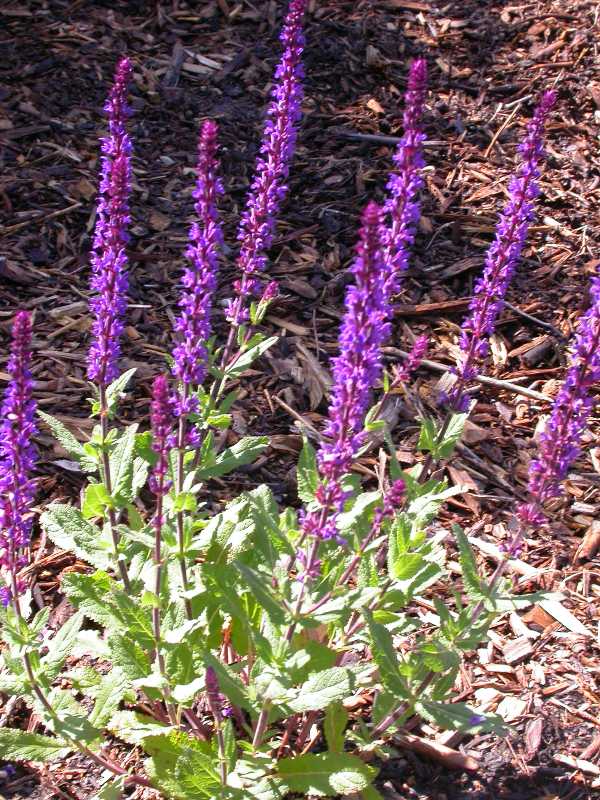
Salvia 'Caradonna'


I have found this Salvia to be extraordinarily tough and hardy. It's survived in my perennial field for at least 10 years with little or no care. We cut hard on it every spring for early blue purple flowers. Now available in pots for fall planting and again in the spring.
Information below is from the Missouri Botanical Garden

Salvia nemorosa 'Caradonna'


Common Name: sage
Type: Herbaceous perennial
Family: Lamiaceae
Zone: 4 to 8
Garden Location: Enterprise Rent-A-Car Flower Borders, Kemper Low Maintenance Garden
Height: 1 to 2 feet
Spread: 1 to 2 feet
Bloom Time: June to September
Bloom Description: Blue-violet
Sun: Full sun
Water: Dry to medium
Maintenance: Low
Flowers: Showy Flowers
Leaves: Fragrant
Wildlife: Attracts Butterflies
Tolerates: Dry Soil, Drought, Air Pollution, Deer

Culture

Easily grown in average, dry to medium, well-drained soil in full sun. Tolerates drought. Prefers moist, gravelly or sandy soils with good drainage. Plants may repeat bloom throughout the summer, but need regular moisture to encourage this. Remove spent flower spikes to help extend the bloom period. Plants may become somewhat floppy and open up as the summer progresses, particularly in humid climates. If plants flop or otherwise depreciate in summer to the point where they look unsightly, consider cutting them back to the basal foliage. In any event, cut plants back after flowering has concluded.

Noteworthy Characteristics

‘Caradonna’ is an erect, clump-forming perennial salvia that is noted for its dark purple stems and blue-violet flowers. It typically forms a foliage mound to 12” tall. Medium green leaves are aromatic when crushed. In summer, dense terminal spikes of violet-blue flowers rise above the foliage to 24” tall. Flowers are attractive to bees and butterflies.

Problems

No serious insect or disease problems. Some susceptibility to powdery mildew, leaf spot and rust. White fly and scale are occasional insect pests.

Garden Uses

Perennial borders, cottage gardens, butterfly gardens or wild gardens. Interesting accent.

Salvia nemorosa ‘Caradonna’


Perennial Sage

USDA Zone: 3-9

Plant number: 1.468.400


The Perennial Sages are invaluable perennials for their rich display of spiky flowers in the early summer border. This selection is medium to tall, with flowers of deep violet-blue held on unusually dark stems. Remove faded blooms to encourage repeat flowering. Excellent for cutting. Drought tolerant once established. Also tolerates heat and humidity. Plants may be easily divided in early spring or fall. Can be clipped back hard after blooming, to rejuvenate the foliage. Attractive to both butterflies and hummingbirds. Winner of the 2000 Outstanding New Perennial Award by the International Hardy Plant Union.

Further details for
Salvia nemorosa ‘Caradonna’


Optimal Growing
Conditions
Appearance and
Characteristics
Sun Exposure
  Full Sun
Soil Type
  Normal or
  Sandy or
  Clay
Soil pH
  Neutral or
  Alkaline or
  Acid
Soil Moisture
  Average or
  Dry or
  Moist
Care Level
  Easy
Flower Colour
  Purple
Blooming Time
  Early Summer
  Mid Summer
Foliage Color
  Grey Green
Plant Uses & Characteristics
  Accent: Good Texture/Form
  Attracts Butterflies
  Attracts Hummingbirds
  Border
  Containers
  Cut Flower
  Deer Resistant
  Drought Tolerant
  Rabbit Resistant
  Massed
Flower Head Size
  Large
Height
   50-75 cm
   20-29 inches
Spread
   45-60 cm
   18-23 inches

Thursday, August 15, 2013

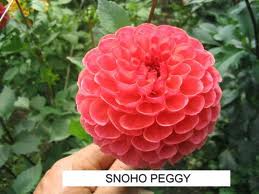
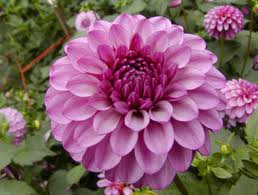
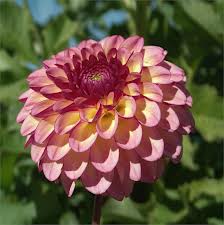
New Additions to Shady Grove's Line up -Mostly Dahlias

Ken's Choice
Robinhood
Oreiti Liz
Unknown a bit short too
Robinhood
Dot.com
Foxy Lady
Agastache

Monday, July 29, 2013

Late Summer Flowering Shrubs and an Aster

These are in bloom at the perennial plant nursery. All are available as of 7/29/13


(Text below is from the Missouri Botanical Garden's website)

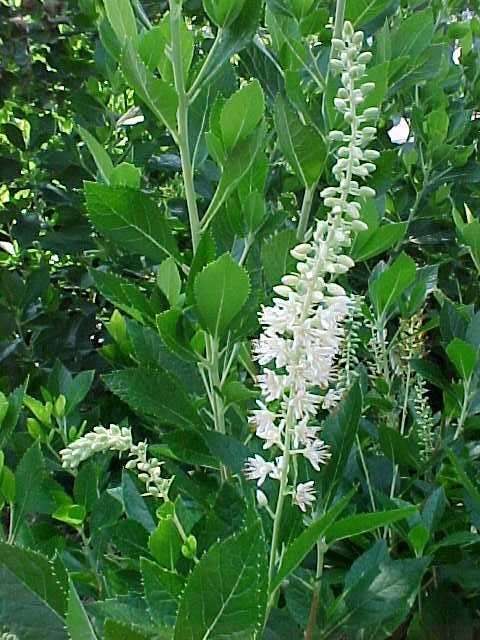
Clethra alnifolia 'Caleb' VANILLA SPICE                          Common Name: sweet pepperbush
Type: Deciduous shrub
Family: Clethraceae
Zone: 4 to 8
Garden Location: The Fragrance Garden, Bank of America Family Vegetable Garden
Height: 3 to 6 feet
Spread: 3 to 6 feet
Bloom Time: July to August
Bloom Color: White
Bloom Description: White
Sun: Full sun to part shade
Water: Medium to wet
Maintenance: Low
Flowers: Showy Flowers, Fragrant Flowers
Leaves: Good Fall Color
Tolerates: Clay Soil, Wet Soil, Dense Shade
Uses: Erosion Control, Rain Garden

Culture

Easily grown in average, medium to wet soils in full sun to part shade. Prefers part shade and consistently moist, acidic, sandy soils. Soils should not be allowed to dry out. Tolerates clay soils. Tolerates full shade. Promptly remove root suckers unless naturalized look is desired. Propagate by cuttings. Prune if needed in late winter.

Noteworthy Characteristics

‘Caleb’ is a summersweet cultivar that is commonly sold in commerce under the trade name of VANILLA SPICE. It is a densely-branched, rounded, suckering, deciduous shrub that typically grows to 3-6’ tall and is noted for its compact size, large flower panicles and large individual flowers. Sweetly-fragrant, white flowers bloom in large cylindrical, bottlebrush-like, terminal panicles (each to 10-12" long) for approximately 4-6 weeks in summer. Each individual flower is about double the size of the flowers on other summersweet varieties. Serrate, obovate, dark green leaves (to 4” long) turn a variable but generally attractive yellow/golden brown in fall. Flowers give way to dark brown seed capsules that may persist well into winter. Flowers are very attractive to butterflies and bees. Summersweets are somewhat unique among late summer-flowering shrubs because of their ability to bloom in shady locations. U. S. Plant Patent Applied For (PPAF).

Problems

No serious insect or disease problems.

Garden Uses

Mass or group in lawns, foundations or shrub borders. Good flowering shrub for shade or woodland gardens. Effective as a hedge. Also appropriate for moist soils along stream banks or pond/water garden peripheries. Also may be naturalized in cottage gardens, wild gardens or naturalized areas. Plant near a patio to enjoy the fragrant late summer bloom. Compact size makes this an ideal flowering shrub for smaller gardens.


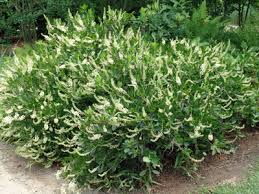
Clethra alnifolia 'Hummingbird'


Common Name: sweet pepperbush
Type: Deciduous shrub
Family: Clethraceae
Zone: 3 to 9
Height: 2 to 4 feet
Spread: 3 to 5 feet
Bloom Time: July to August
Bloom Color: White
Bloom Description: Creamy white
Sun: Full sun to part shade
Water: Medium to wet
Maintenance: Low
Flowers: Showy Flowers, Fragrant Flowers
Leaves: Good Fall Color
Fruit: Showy Fruit
Wildlife: Attracts Butterflies
Tolerates: Clay Soil, Wet Soil, Dense Shade
Uses: Erosion Control, Hedge, Rain Garden, Will Naturalize

Culture

Easily grown in average, medium to wet, well-drained soil in full sun to part shade. Adaptive to a wide range of soil, moisture and light conditions. Prefers part shade and consistently moist to wet, acidic soils. Tolerates full shade, however. Spreads slowly by rhizomes.

Noteworthy Characteristics

This summersweet cultivar is a compact, slowly spreading, deciduous shrub which typically grows only 3-4' tall and features fluffy, bottle brush-like, terminal, 3-6" spikes (racemes) of extremely fragrant white flowers which bloom on current season's growth for 4-6 weeks in mid to late summer and serrated, glossy, dark green leaves which turn a striking yellow in autumn. Flower spikes give way to spikes of dark brown seed capsules which persist into winter and provide continuing interest. Flowers are very attractive to butterflies and bees. Somewhat unique among the summer-flowering shrubs because of its ability to produce good bloom in shady locations. This cultivar retains a more compact, mounding shape and is more floriferous than the species (Clethra alnifolia).

Problems

No serious insect or disease problems.

Garden Uses

This compact summersweet cultivar is an excellent, trouble-free shrub which masses well in conspicuous areas in lawns or shrub borders where its attractive foliage, fragrant summer bloom, good fall color and tidy winter appearance can be showcased. Compact, rounded habit makes it ideal for small gardens or around foundations. Also a good shrub for wet areas, such as low spots, stream banks or pond/water garden edges.

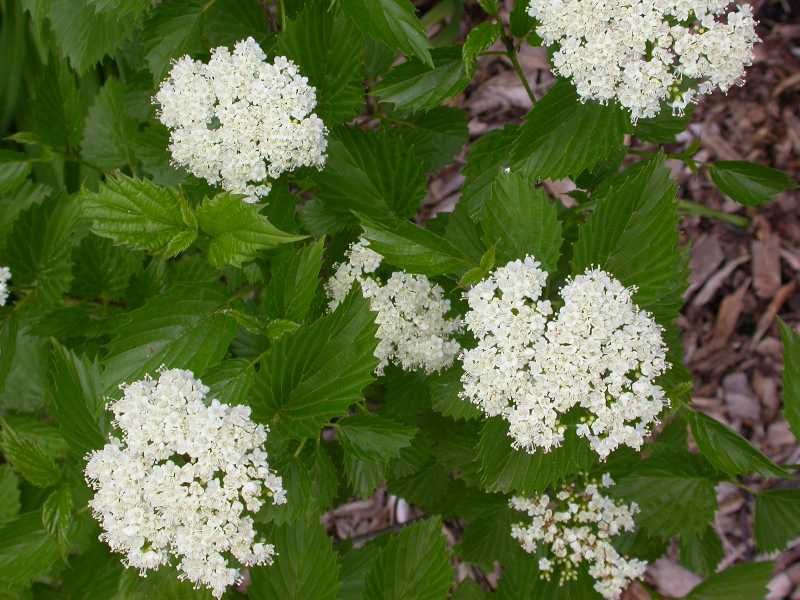
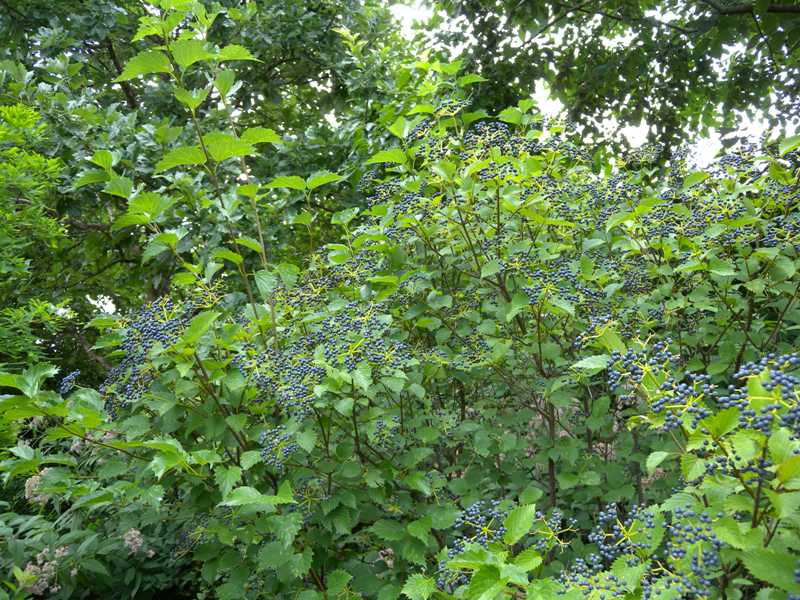
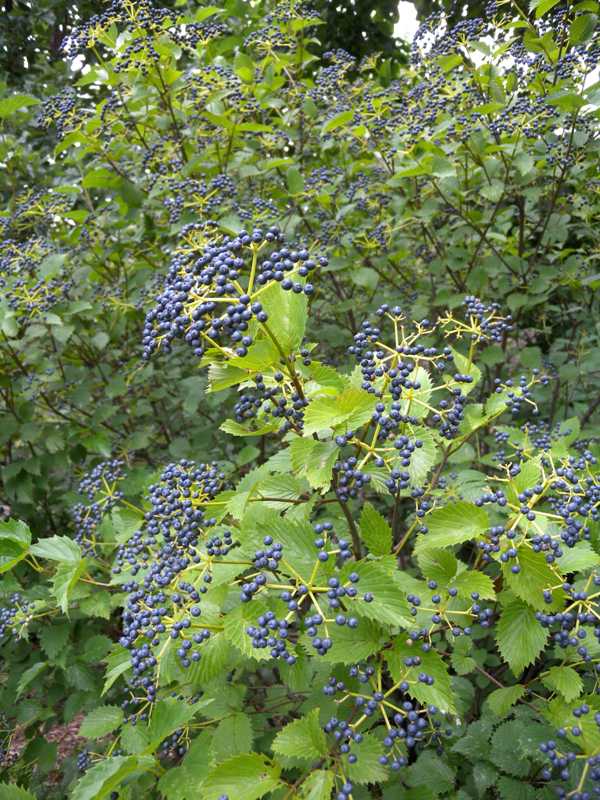
Viburnum dentatum 'Christom' BLUE MUFFIN


Common Name: arrowwood viburnum
Type: Deciduous shrub
Family: Adoxaceae
Zone: 3 to 8
Garden Location: Lang Family Bird Garden, George Washington Carver Garden, Lois Whiteside Franklin Flower Trial Garden, Lucy and Stanley Lopata Prairie Garden
Height: 3 to 5 feet
Spread: 3 to 4 feet
Bloom Time: May to June
Bloom Color: White
Bloom Description: White
Sun: Full sun to part shade
Water: Medium
Maintenance: Low
Flowers: Showy Flowers
Leaves: Good Fall Color
Fruit: Showy Fruit
Wildlife: Attracts Birds, Attracts Butterflies
Tolerates: Clay Soil, Black Walnuts
Uses: Hedge

Culture

Easily grown in average, medium, well-drained soil in full sun to part shade. Prefers moist loams, but tolerates wide range of soils. Established plants have some drought tolerance. Prune as needed immediately after flowering.

Noteworthy Characteristics

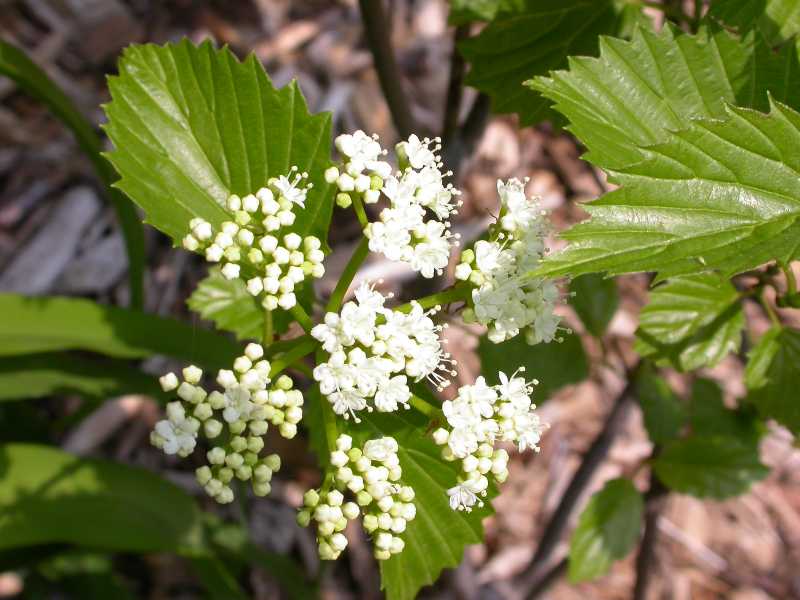
BLUE MUFFIN is a compact, rounded, deciduous, arrowwood viburnum shrub that typically matures to 3-5’ tall and as wide. White flowers in flat-topped cymes appear in mid to late spring. Flowers give way to pea-sized blue berries that mature in late summer. Berries are attractive to birds. Ovate dark green leaves (to 3.5” long) turn attractive shades of orange to burgundy-purple in fall. Original cultivar name of this plant is ‘Christom’, but it is being marketed under the name of BLUE MUFFIN.

Plant of Merit

This compact arrowwood viburnum typically grows to 3-5 feet tall. It is noted for its flat-topped cymes of white flowers in spring, pea-sized blue berries that mature in late summer, ovate dark green leaves and orange to burgundy-purple fall color. It is an easy-to-grow selection for use as a landscape specimen, hedge, or grouped in shrub borders or foundations. Tolerates a wide range of soils, but prefers moist loams in full sun to part shade.

Problems

No serious insect or disease problems. Susan's note: These are heavily eaten by birds.

Garden Uses

A compact version of the species that is native to Eastern North America. Specimen or groups. Shrub borders, foundations or hedges.


Aster 'Alert' 

 (text from Perennial Resource .com)


Common Name:
 Aster-New York

Common Name (Alternative): Michaelmas Daisy

Densely packed clusters of deep purplish-red flowers provide outstanding color in the garden from late summer into fall. They make a terrific accent to fall blooming grasses and the changing colors of the trees. 'Alert' has an especially compact habit and the flowers are great for cutting.
The novi-belgii species is valued for its compact growth habit, rich flower color, and floriferous tendancies. It is native to North America.


CHARACTERISTICS:

Susan's note: these really do bloom Late JUly to Frost. I have honey bees all over these. They are hotter pink than these photos.


Height:
  12-15 Inches
Spread:
  15-18 Inches
Flower Color:
  Purple-red shades
Foliage Color:
  Green shades
Hardiness Zone:
3,4,5,6,7,8
Sun or Shade?:
  Full sun (> 6 hrs. direct sun)
Wet or dry?:
  Average water needs
Want to see wings?:
  Attracts butterflies
How fast should it grow?:
  Medium
When should it bloom?:

  Late summer
  Early fall
  Mid-fall

ATTRIBUTES:

This species performs best in rich, evenly moist soil and full sun. Give them lots of room to grow; good air circulation will help to prevent powdery mildew. To maintain their health and vigor, divide plants every couple of years in the spring.


Border plants
Container
Cut flower or foliage
Mass Planting

HOMEOWNER GROWING & MAINTENANCE TIPS:

This species performs best in rich, evenly moist soil and full sun. Give them lots of room to grow; good air circulation will help to prevent powdery mildew. To maintain their health and vigor, divide plants every couple